Runners tend to think in black and white:
“Either I'm fine and I keep running, or I'm hurt and I stop.”
Most of the time, the answer is somewhere in between. Here's the simple rule Shannon teaches every runner she sees.
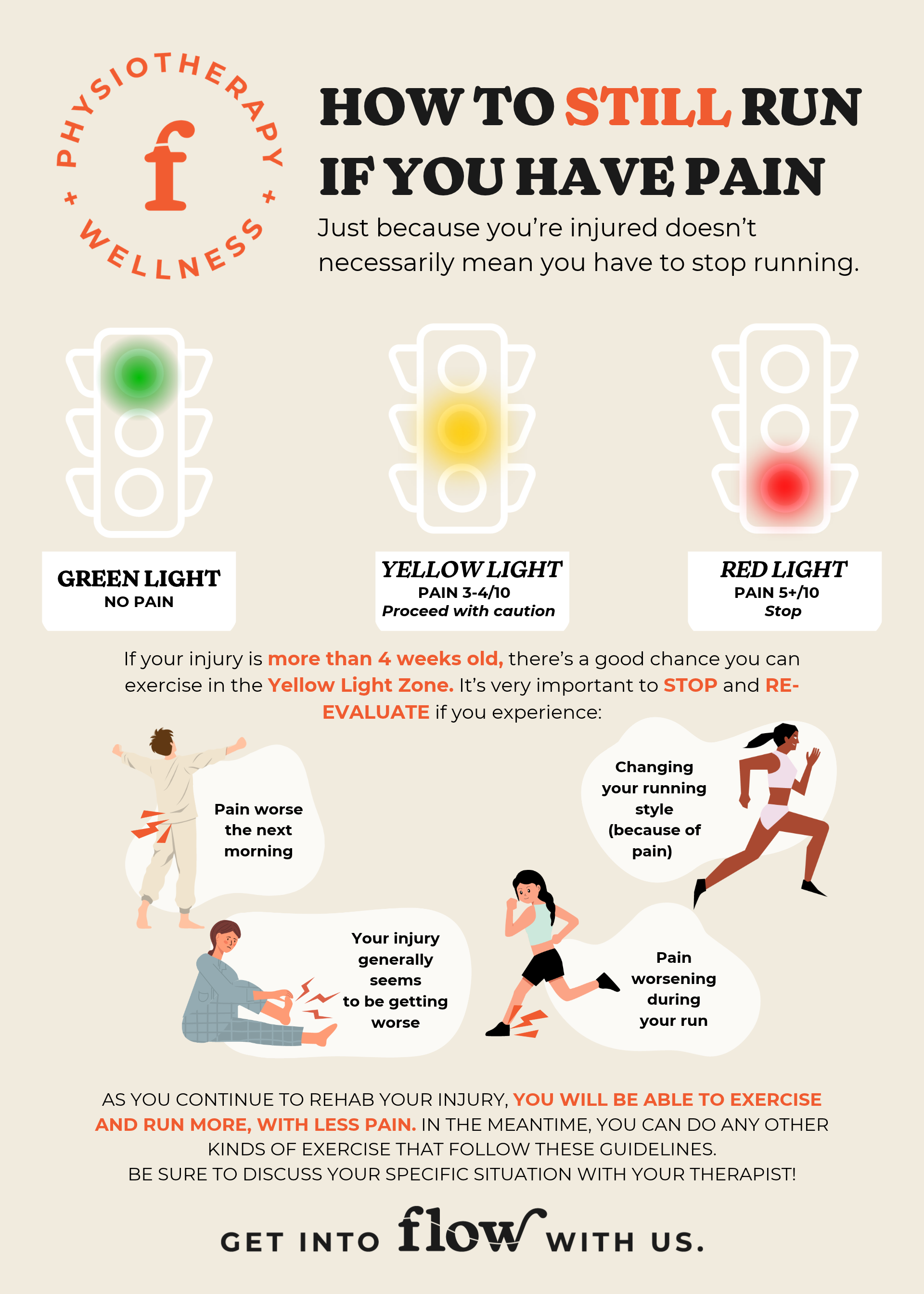
The Yellow Light rule
If your injury is more than a few weeks old, you can usually keep running, as long as the pain:
Stays at 4 out of 10 or less while you run
Settles within an hour afterward
Isn't worse the next morning
If you break any of those three, it was too much. The fix is to do less, not nothing. For example, if 20 minutes feels fine but 25 minutes leaves you sore the next day, take a day or two off, go back to 20 minutes for a week, then build again.
When the light is red: stop and get checked
The Yellow Light rule is for aches that have been around a while. Stop running and book an assessment if you have:
Pain that started in the last week or two, especially with swelling or heat
Pain when you walk, or pain when you hop on the sore leg
A sharp, pinpoint sore spot on a bone (common in the shin or foot)
Deep groin or hip pain with running or at night
These can be signs of a bone stress injury, which needs proper rest and sometimes imaging. A week or two off loses very little fitness, especially if you cross-train.
The most common running injuries
About 70% of running injuries happen at or below the knee:
Runner's knee (patellofemoral pain): achy pain around the kneecap, worse with stairs, squatting or sitting
IT band pain: sharp pain on the outside of the knee, often a few kilometres into a run
Achilles pain: stiff and sore first thing in the morning and at the start of runs
Shin splints: pain along the inside of the shin that gets worse with running
Plantar heel pain: heel pain that's worst with your first steps in the morning
The good news: most of these can be managed while you keep running in a modified way.
What usually causes them
The most common trigger is a jump in training: joining a new run club, adding hills or speed work, or starting a race build. Your heart and lungs adapt quickly. Tendons, bones and muscles need more time to catch up.
A few ways to build safely:
Change one thing at a time. Build your distance first, then add speed.
Keep weekly increases modest, especially once you're running more than 30 to 40 km a week.
Build in an easier week every 3 to 4 weeks.
Strength train. Stronger calves, hips and thighs handle the thousands of impacts in every run.
When to book a running analysis
If pain keeps breaking the Yellow Light rules, keeps coming back in the same place, or you just aren't sure, a running analysis can find out why. Shannon looks at your strength, your stride and your training, then builds a plan that keeps you running wherever possible.

This post is general education, not a diagnosis. If you're unsure about your pain, book an assessment.